






Introduction
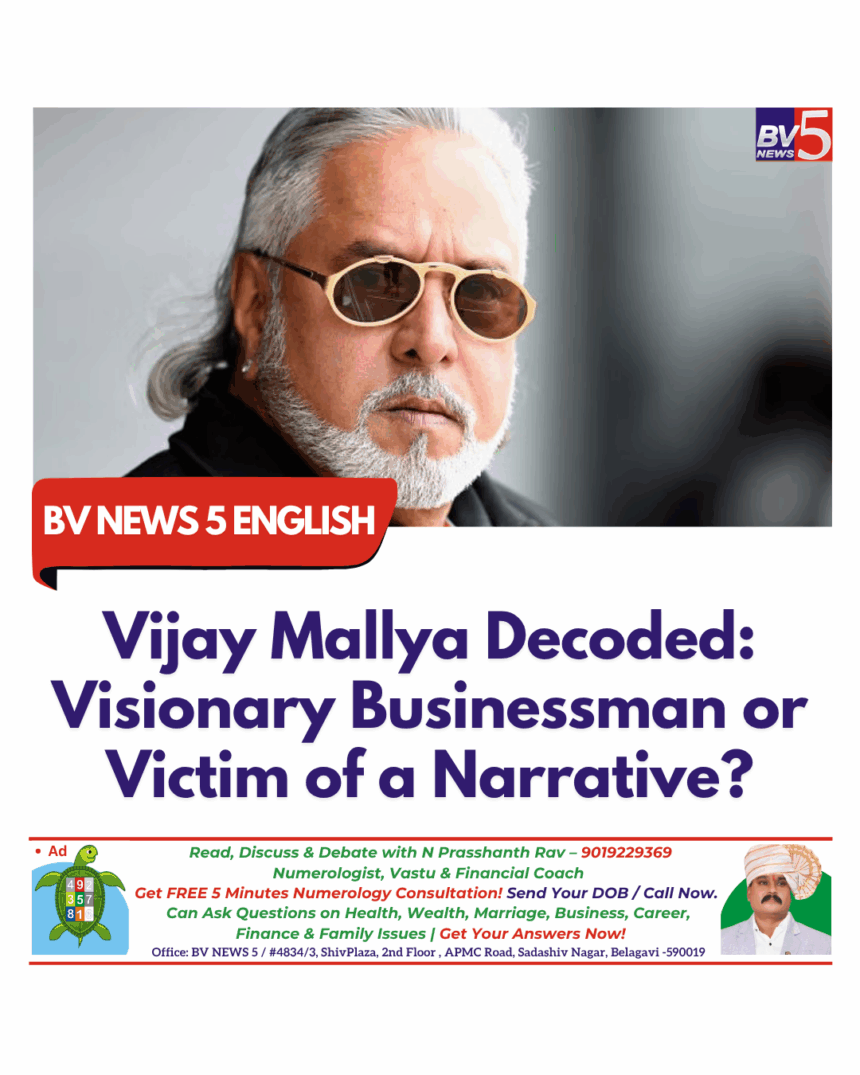
Vijay Mallya, once hailed as the “King of Good Times,” has been a polarizing figure in India’s corporate and political landscape. Known for his flamboyant lifestyle and business ventures, Mallya’s downfall has often been portrayed as the result of mismanagement, fraud, and deliberate evasion. But for the first time in nearly a decade, Mallya has shared his side of the story in a detailed 4-hour podcast with Raj Shamani. This article decodes the key takeaways from that conversation and presents a holistic view of the man behind the headlines — in his own words.
The Rise of a Business Tycoon
Born in Kolkata, Vijay Mallya was raised in a business environment under the guidance of his father, who ran United Breweries. Contrary to the glamorous image often associated with him, Mallya claimed he had a modest upbringing, receiving only ₹400 as a monthly stipend during college.
At the age of 27, following his father’s demise, Mallya took over as chairman of the UB Group. He adopted a decentralized management approach, empowering his team and slowly expanding the business.
He is credited with turning Kingfisher Beer into an iconic brand that captured 52% of India’s beer market, and with making McDowell’s No.1 the world’s most-sold whisky. According to Mallya, he was much more than a liquor baron — he was an entrepreneur with vision.
Kingfisher Airlines: The Dream and the Downfall
In 2005, Mallya launched Kingfisher Airlines with a vision of premium flying at affordable prices. Though the media labeled it a birthday gift for his son, Mallya maintained it was a strategic business venture. The airline introduced unheard-of luxuries in Indian aviation: great food, in-flight entertainment, and premium service — even for economy-class travelers.
However, 2008 brought a global financial crisis. Crude oil prices skyrocketed to $140 per barrel, aviation fuel costs surged, and funding dried up. According to Mallya, Finance Minister Pranab Mukherjee advised against shutting the airline for the sake of connectivity and jobs — a decision Mallya now regrets not opposing.
The Air Deccan Merger & Business Strategy
In 2007, Mallya acquired Air Deccan for $137 million. While critics slammed the move, alleging it was a shortcut to get international flying rights, Mallya defended it as a multi-brand strategy, akin to Coca-Cola and Diet Coke. He rebranded Deccan as Kingfisher Red, a low-cost version of the premium Kingfisher.
But critics argue that Indian consumers in the budget segment didn’t value the added services and couldn’t be converted into loyal customers, making the model financially unsustainable.
Loans, Collateral, and Collapse
Kingfisher Airlines borrowed ₹6,203 crore from 17 banks including SBI and IDBI. Mallya claims UB Group invested ₹3,000 crore and provided collateral in the form of brands, shares, and properties. While media outlets often cite a ₹9,000 crore loan default, Mallya claims that as of 2024, ₹14,100 crore has been recovered, more than double the outstanding debt.
He also alleges that media ignored the full list of securities pledged and focused only on Kingfisher shares, misrepresenting the situation.
Investigations and Legal Troubles
The CBI and ED allege that Mallya siphoned ₹423 crore and laundered ₹3,547 crore. He denies these claims, stating that most expenses were in foreign currency and essential for airline operations like aircraft leases and spare parts. He accuses the agencies of fabricating evidence and insists there is no proof linking Kingfisher funds to overseas property purchases.
Did Mallya Flee India?
Mallya flew to London on 2nd March 2016 via Jet Airways. He claims it was a scheduled trip, not an escape. He informed Finance Minister Arun Jaitley about his departure and asked the banks for a settlement. His passport was suspended on 15th April 2016, and revoked on 24th April, legally trapping him in the UK.
From 2012 to 2016, he says he made four settlement offers, all ignored by banks.
Media Trials & Public Perception
One of the major blows to his image was the lavish 60th birthday party featuring pop star Enrique Iglesias. Media backlash was swift, especially since Kingfisher employees had not been paid. Mallya clarifies that this party happened in 2015 — three years after Kingfisher shut down — and was paid from personal funds, not company money.
He also denied involvement in a suicide case linked to salary issues, calling it a personal matter manipulated by the media.
Branding Genius or Showman?
Mallya’s ownership of RCB and Force India F1 is often seen as vanity. However, he argues they were branding tools for Royal Challenge Whisky and Kingfisher, both of which saw a rise in visibility and sales. Even the Kingfisher Calendar — which launched careers of stars like Deepika Padukone and Katrina Kaif — was, in his words, a marketing strategy, not wealth flaunting.
Life in the UK & Final Words
Currently, Mallya leads a semi-retired life in the UK, surrounded by his dogs, classic cars, and ongoing legal battles. He claims to be religious, having donated for gold plating at Tirupati Temple, and believes that God will deliver him justice.
His close friend and Biocon founder, Kiran Mazumdar-Shaw, has defended him publicly, saying that he gave his all to save Kingfisher but was let down by the system and his political associates.
Mallya’s biggest regret? Not downsizing when he had the chance, and possibly launching Kingfisher Airlines in the first place.
Conclusion: Victim or Villain?
Vijay Mallya maintains that he is not a criminal but a victim of economic circumstances, biased policies, and media narratives. With over ₹14,100 crore already recovered, he questions why he still carries the label of a wilful defaulter.
He remains open to a fair and independent trial in India and insists he has nothing to hide.
So, was Vijay Mallya’s fall a result of poor judgment, systemic bias, or media sensationalism?
The final judgment rests with the people and the judiciary.
What do you think? Let us know in the comments.

 https://www.youtube.com/@BVNEWS5/videos